
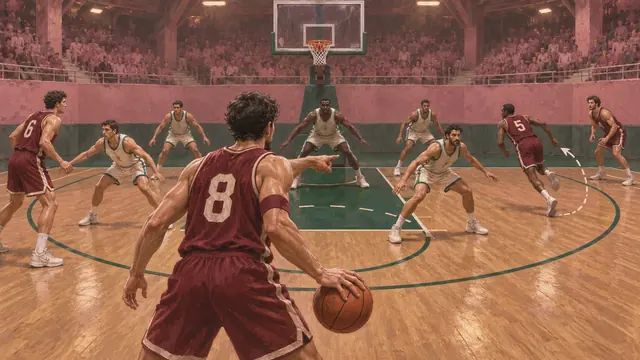
The rehearsed play begins, but the defense has already changed the question. A teammate cuts away from the expected lane. The captain must decide whether to continue, redirect or create a different opening. Spogym Games develops sports game concepts around that act of reading a team situation from within it. The player stays connected to a captain’s perspective rather than receiving a perfect overhead answer at every moment.
A play is a starting agreement
Rehearsal gives teammates a shared expectation. It should not turn them into pieces that follow a diagram regardless of what happens around them. Our proposed systems use a play as a structure that can be revised through visible cues. A defender’s position, a teammate’s movement and the space left on the court should explain why a second option becomes useful.
Second Read
Second Read studies the moment after the first passing lane closes. The captain reads the defense and recognises the next available relationship, including movement away from the ball. A successful possession should feel like a shared adjustment rather than a solo animation that ignores the other players.
Last Possession
Last Possession places that reading under a tighter decision window. The captain must organise the final approach without treating every remaining moment as an invitation to force a shot. The concept asks how preparation, communication and a clear fallback can remain meaningful when there is little time to revise the plan.
Study the court before the highlight
The Playbook compares the two concepts through their different tactical questions. The Film Room follows defense reading, off-ball movement, captain perspective and the final-possession choice. These are design studies and proposed interactions, not claims about a released sports simulation or real match results.
What is public now
Spogym currently presents concept dossiers, original artwork and development writing. There is no announced launch date, public build, licensed league or player roster. The intended first demonstration would focus on one readable team decision before expanding into a complete match. We want the next pass to make sense because of what the captain observed, not because an interface simply identified the highest-rated action.